
If you want a brighter smile, you have likely looked at both professional teeth whitening and whitening strips. Both can improve the look of your teeth, but they differ in speed, strength, comfort, and how long results tend to last.
In simple terms, whitening strips are a convenient over-the-counter option for mild staining. Professional in-studio teeth whitening is usually the better fit if you want faster, more even results and a more customized experience.
This guide breaks down professional teeth whitening vs whitening strips so you can choose the option that best fits your goals, budget, and timeline.
What Are Whitening Strips?
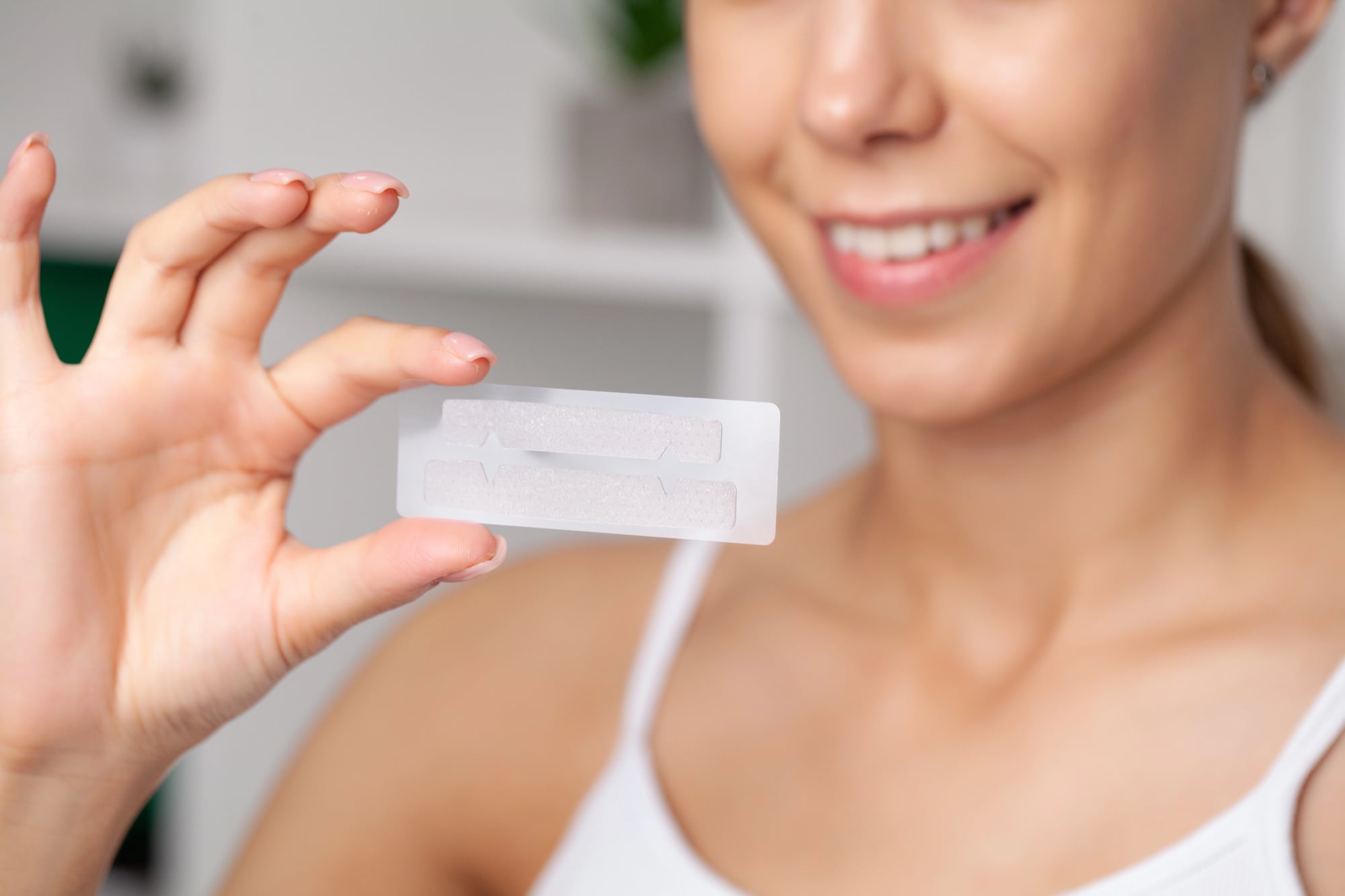
Whitening strips are thin plastic strips coated with a bleaching gel, usually formulated with a lower-strength peroxide. You place them over your teeth for a set amount of time each day, often for one to two weeks or longer.
Their main appeal is convenience. They are easy to buy and use at home, and generally cost less upfront than professional services.
The tradeoff is fit and consistency. Because strips are made for general use, they may not sit evenly on every smile. That can lead to patchy coverage, missed areas, or gel reaching the gums.
What Is Professional Teeth Whitening?
Professional in-studio teeth whitening is a cosmetic service done in a controlled setting by trained teeth whitening Specialists. During a professional in-studio session, the bleaching gel is carefully and evenly applied, often with LED light support to speed up the process.
This approach is more customized than whitening strips. The application is adjusted to your smile, with care taken to protect the gums and improve evenness.
Results vary based on your starting shade, enamel condition, and the type of staining you have, but many clients see a visibly brighter smile after one whitening appointment.

Key Differences Between Professional Whitening and Whitening Strips
When comparing professional teeth whitening vs whitening strips, it helps to look at the factors that matter most.
Speed of results
Professional whitening is much faster. Most in-studio sessions take about 60 to 90 minutes, and many people notice a visible change right away.
Strips work more slowly. They usually need repeated daily use before you see meaningful results, which can be a drawback if you have a wedding, event, photos, or interviews coming up soon.
Whitening strength
Professional whitening uses stronger formulas than most over-the-counter products. That usually means better teeth whitening effectiveness, especially for deeper or older stains.
Whitening strips can help with lighter surface staining, but they are typically less effective on more noticeable discoloration.
Longevity of results
If you are wondering how long teeth whitening lasts, professional treatments usually offer longer-lasting results. With good aftercare, a white diet right after treatment, and maintenance between appointments, results can last for months and sometimes longer.
Results from strips often fade faster. Because they are milder, many people need to buy and use them again sooner to maintain the same look.
Tooth sensitivity
Sensitivity can happen with both options, but the experience is often different. Whitening strips may cause more irritation because the fit is generic and the gel can reach the gums. Repeated daily use can also add to discomfort.
Professional services are typically applied more carefully and with comfort in mind. Because the treatment is supervised and customized, it may help reduce uneven whitening and make the process easier for people looking for the best whitening option for sensitive teeth. That said, results and sensitivity levels still vary from person to person.
Cost comparison
Whitening strips usually cost less upfront, which makes them appealing if budget is your top concern.
Professional services cost more upfront, but they may offer better value if you want stronger, longer-lasting results. Replacing strips again and again can add up over time.
Convenience
Whitening strips are convenient because you can use them at home and work them into your routine.
Professional whitening is convenient in a different way. You schedule one appointment, have the treatment done for you, and leave without needing to repeat the process every day for weeks.
Which Option Works Better for Stains?
The best option depends on the kind of stains you have. Results vary based on enamel condition, stain severity, lifestyle habits, and consistency.
For mild surface stains, whitening strips may be enough to give your smile a modest boost.
For darker, older, or more stubborn stains, professional whitening is usually more effective. In-studio teeth whitening is designed to deliver stronger lifting power and more even coverage, which can matter if you want a more noticeable result.
Are Whitening Strips Safe?
Whitening strips are generally safe when used exactly as directed. They are designed for home use and are one of the most common over-the-counter products.
Problems usually happen when they are overused, worn too long, or used too often. That can increase sensitivity and gum irritation.
Professional treatments offer more oversight. Because the treatment is applied by trained Specialists, the process is more controlled and tailored to your smile.
When Professional Whitening Makes More Sense
Professional treatments often makes more sense if:
- You want faster results
- You have an event or deadline coming up
- You want more even whitening
- You are concerned about gum irritation or uneven strip placement
- You want a more customized and comfortable experience
If that sounds like what you need, you can explore professional in-studio teeth whitening near you.
Who Might Prefer Whitening Strips?
Whitening strips may be a good fit if:
- You have mild staining
- You are comfortable whitening at home
- You want a lower upfront cost
- You do not mind slower, more gradual results
They can also appeal to people who want a simple over-the-counter option before committing to professional whitening.
If you prefer at-home whitening but want something more supportive than standard strips, specialist-grade at-home products can be a useful option for maintenance between appointments.
FAQ Section
How long does an in-studio session take to complete?
Most whitening sessions take about 60 to 90 minutes.
Will my teeth hurt during a professional treatment?
Some people notice temporary sensitivity, but professional whitening is applied carefully with comfort in mind. Results vary from person to person.
Do I need to avoid certain foods after brightening my smile?
Yes. A white diet is usually recommended for the first 24 to 48 hours after whitening to help protect your results.
Can I maintain my new shade at home?
Yes. Maintenance between appointments with specialist-grade at-home whitening products can help support longer-lasting brightness.
How do I know if I am a good candidate for in-studio services?
Many clients are good candidates for professional in-studio teeth whitening, but results depend on your starting shade and the type of stains you have. For more guidance, visit the FAQ page.
Final Thoughts
When comparing professional teeth whitening vs whitening strips, there isn’t a single best answer for everyone. Whitening strips can be a good option for managing light stains, working with a smaller budget, or achieving gradual results at home.
Professional in-studio teeth whitening is often the stronger choice if you want faster results, better coverage, and longer-lasting brightness. It is also a more customized experience, which can help with comfort and consistency.
If you want to learn more about professional whitening options, explore the services and guidance available at WeWhiten.

